
Floods, Drains, and the Culture of Infrastructure
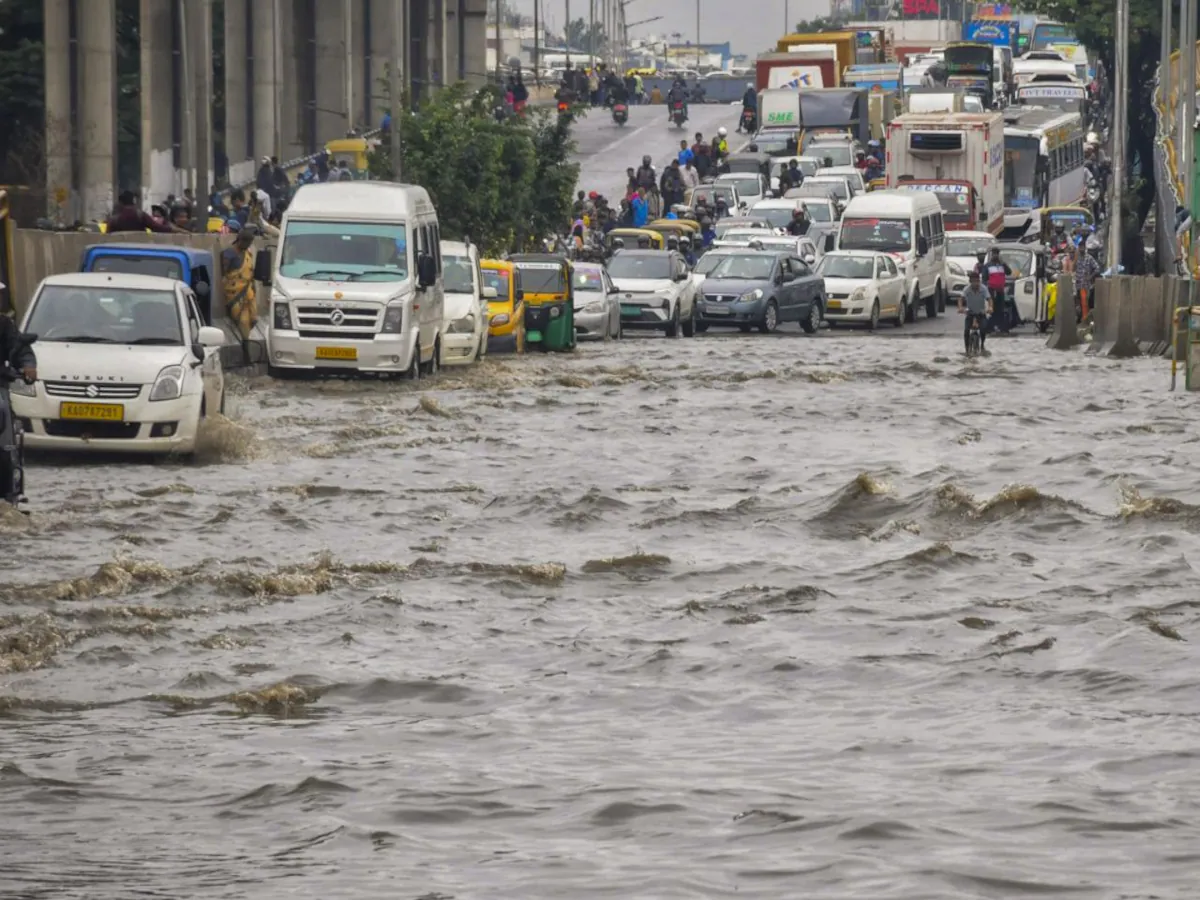
As Bengaluru finds itself once again submerged under the weight of its own water, the now-familiar images circulate: submerged roads, stranded commuters, flooded homes. And with them, an equally familiar question: Why does Bengaluru flood?
Many have answered that question. The erasure of lakes and wetlands. The narrowing and concretisation of rajakaluves. The unchecked urban expansion. But while we may now be proficient in diagnosing the problem, the question that lingers is more pressing:
What do we actually do about it?
Stormwater Isn’t the Enemy—Our Systems Are
Historically, stormwater in this region was not a nuisance to be discarded, but a resource to be harnessed. Bengaluru’s original settlement patterns—built around interconnected lakes and stormwater networks—were engineered to make the most of every drop. But with the city’s growth, we’ve moved to external water sources, ignoring the potential of the stormwater, even while we deal with issues of water scarcity every year.
The issue is no longer about what we’ve lost, but about what we’re building now.
How do we move forward with foresight, rather than just fight fires—or floods—after the fact?

Map of Bangalore from 1806 showing tanks, wetlands and canals integrated with village settlements

The city is naturally divided into valleys and watersheds which have distinct topography and slope. It is important that we devise stormwater infrastructure for each of these characteristics, with emphasis on the hydrological function they must perform.
Stormwater Needs a System, Not a Shortcut
In a natural hydrological system, water moves across the landscape through an inter-connected network of wetlands, lakes, and channels, linked via both surface and subsurface flows. It is this interconnectedness that enables the system to function as a whole—moving water from upland to lowland, and supporting critical processes such as infiltration, retention, and evapotranspiration.
When this connectivity is broken, the consequences are predictable: upstream flash floods, downstream stagnation and waterlogging. In our urban form—paved, concretised, with minimal permeable surface—water rushes too quickly into overburdened drains, causing flash floods. Fragmented, channelised networks cannot cope with either the volume or the complexity of water flows in growing cities.
This is why a systemic approach is essential. Blue-Green Infrastructure—now being adopted worldwide—offers a way forward by integrating natural hydrological processes into the built environment. These systems are not just “green beautification” efforts, but functional, layered infrastructures that slow water, filter pollutants, and allow the city to breathe. Water is held, treated, and reintroduced into the urban landscape with purpose.
What sets Blue-Green Systems apart is their ability to mimic natural systems within urban constraints. They restore lost ecological and hydrological functions, not by reverting to the past, but by reinterpreting them to meet the needs of a contemporary city. On a spectrum from fully urban to fully natural, Blue-Green Systems seek balance—combining the logic of engineering with the resilience of ecology.
As the rest of the world adapts to this approach, Bengaluru holds a unique advantage: the city was already designed as such a system. Historically built around a cascading network of tanks, wetlands, and stormwater channels, the genesis of Bengaluru’s urban form embodies the very principles we want to adopt. The challenge now is not to invent a new system, but to recognise, restore, and reimprint these flows within the fabric of the modern city.
The K100 Project: A Glimpse of Possibility
The K100 Citizens’ Waterway project has offered a demonstration of what stormwater infrastructure could be—not just a channel for runoff, but a vibrant, multifunctional public space. It proved that flood resilience, improved water quality, civic amenities, and community ownership could all be delivered together through coordinated action across departments.
However, the project also revealed a deeper, systemic challenge: stormwater continues to be treated as an isolated problem during rains, not as part of a city-wide, useful, interconnected hydrological system.
To make real progress, we must move beyond single-point interventions. Parks, playgrounds, streets, traffic islands, and open spaces must be reimagined as dual-function urban infrastructure—serving their original purpose while becoming active elements in a connected blue-green network. This is not about taking away function, but about layering resilience into everyday spaces.
The future of Bengaluru’s flood management lies in a system of multi-use public spaces that delay, retain, store, and reuse storm water—while enriching urban life.

The K100 Citizens Waterway with pedestrian pathways, water plants to treat water and as a conveyor for stormwater.

A public square in Rotterdam doubles as water collection and storage space during periods of high rainfall

Sampangiramnagar Kalyani in Bengaluru dating back to the 16th Century is a water storage, public space and cultural space.
Culture + Infrastructure = Infraculture
What’s missing isn’t just planning; it’s culture. Not culture in the artistic sense, but in the values, behaviours, and relationships that people and institutions have with infrastructure. When stormwater drains are invisible, abused, or feared, they fail. When they’re reimagined as shared civic spaces—like walkable corridors, planted commons, or ecological buffers—they begin to work for the city.
We call this idea Infraculture—the integration of culture into the design and governance of infrastructure. It is about embedding community, memory, and accountability into the physical systems that shape our lives. It’s about turning “infrastructure” into urban commons—spaces that reflect the needs and aspirations of the people who live around them.
To build a resilient city, we need to go beyond technical fixes. We need to rebuild our relationships—not only between infrastructure and environment, but also between people and place. As the city grows and its climate changes, so must our ways of engaging with water and the spaces it shapes.
Planning and Governance must Change!
Today, the buzzword is resilience. Retrofitting sponge city principles, designing blue-green networks, adding Nature-Based Solutions—these are the solutions many cities across the world are exploring. Bengaluru, though, already has the bones of a sponge city. It was designed that way. But we’ve forgotten how to use it.
The real question is: Can our governance systems remember?
What Must Be Done?
We don’t need more flashy projects or grand promises. We need:
- Better planning based on hydrological data and real-time observation.
- Transparent governance with clear roles and accountability.
- Community participation that goes beyond consultation to co-creation.
- Performance-based metrics for infrastructure—where we measure success not just by budget spent, but by flood reduction, water quality, and public use.
Can We Reclaim What We’ve Lost?
Yes—but not by simply looking to the past. We reclaim by looking deeper — into our systems, our cultures, our behaviours.
We need to plan not only for water movement but for human connection. Because flood prevention isn’t only about water—it’s about trust, design, and shared responsibility.
As the waters recede, we must decide what comes next. Will we return to business as usual, or will we build a city that can weather the storm—together?
Amritha is an architect, urban designer and researcher working at Mod Foundation